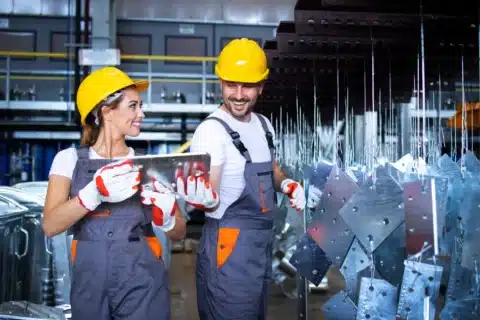

The Smart Factory Era Has Arrived
Injection molding has always been about precision, repeatability, and efficiency but 2026 marks the dawn of something bigger: automation-led transformation.
Across the U.S., plastics manufacturers are embracing smart factory systems, robotics, and AI-driven molding cells that can monitor, adjust, and optimize production in real time.
What used to be a labor-intensive process requiring multiple operators per press is now evolving into digitally connected, self-learning production environments. These new-age injection molding plants rely on data analytics, sensor feedback, and automation-ready professionals to drive productivity and consistency.
And while technology is the engine, people are still the driver, especially those who can bridge the gap between traditional molding expertise and automated manufacturing.
In this article, we’ll explore how automation is transforming injection molding, the technologies leading the change, and most importantly the skills and talent employers need to stay competitive.
The Shift Toward Smart Factories in Plastics Manufacturing
Automation isn’t new to injection molding but its scope has expanded dramatically.
The 2020s saw the rise of Industry 4.0, a movement integrating advanced technologies into manufacturing. In injection molding, that means machines, robots, and sensors don’t just execute commands, they communicate, learn, and adapt.
How Automation is Reshaping Production
Modern injection molding plants use:
- Robotics in Molding: Automated part removal, insert loading, assembly, and packaging.
- Smart Sensors: Real-time monitoring of pressure, temperature, and fill rates.
- Predictive Maintenance: AI-driven analysis to detect wear and prevent downtime.
- Digital Twins: Virtual replicas of molding cells for process simulation.
- Automated Injection Systems: Machines that self-adjust for viscosity and cycle time.
According to Plastics Engineering (2025), over 68% of U.S. molding facilities have already implemented at least one Industry 4.0 technology with robotics and data integration leading adoption.
Key Automation Technologies Revolutionizing Injection Molding
Let’s break down the most impactful automation technologies that are redefining efficiency and workforce needs.
Robotics and Cobots in Molding
Robotic automation is now a standard feature in high-volume plants. From removing parts to inserting components and trimming flash, robotics in molding improves speed, safety, and repeatability.
- Six-Axis Robots handle precise, multi-angle tasks in high-cavitation molds.
- Cartesian Robots manage part removal and stacking with minimal cycle time.
- Collaborative Robots (Cobots) work safely alongside humans for secondary tasks like inspection or packaging.
According to PlasticsToday (2025), companies that implemented robotic automation in their molding lines saw:
- Up to 30% faster cycle times
- 25% reduction in scrap
- 20–40% drop in unplanned downtime
But these benefits depend on hiring technicians who can program, troubleshoot, and maintain robotic systems, a skill gap many manufacturers are now racing to close.
AI and Machine Learning for Process Optimization
The days of manual process tuning are fading fast.
AI systems now analyze thousands of data points from pressure sensors, thermocouples, and flow meters during each cycle. They identify anomalies, predict quality issues, and even make automatic adjustments.
Benefits of AI integration in molding:
- Automatic optimization of shot size, clamp pressure, and cooling time.
- Predictive alerts for maintenance needs.
- Continuous improvement through self-learning algorithms.
A Sensors Journal (MDPI, 2024) study found that AI-based systems improved overall equipment effectiveness (OEE) by 18% on average primarily by reducing defects and downtime.
Automated Injection Systems and Electric Presses
The newest generation of all-electric injection molding machines has redefined precision. They consume 30–60% less energy than hydraulic presses and integrate seamlessly with automation systems.
Advanced control platforms now:
- Adjust injection profiles based on material viscosity.
- Sync with robots and conveyors for lights-out production.
- Use servo-driven systems for pinpoint accuracy.
These systems don’t just boost throughput, they make molding plants more sustainable, consistent, and data-rich.
Predictive Maintenance and Data Analytics
Smart plants run on data.
With predictive analytics, sensors continuously track motor vibration, hydraulic pressure, and temperature to predict failures before they occur.
A packaging supplier in Ohio reported saving over $200,000 annually after implementing a predictive system that flagged early mold wear preventing catastrophic downtime.
For manufacturers, this shift means maintenance teams now need data interpretation skills and familiarity with IoT monitoring systems, not just mechanical know-how.
How Automation Is Changing Workforce Needs
Automation doesn’t eliminate jobs, it transforms them.
As injection molding plants become more digital, employers are seeking hybrid professionals who combine mechanical understanding with programming and analytical ability.
The New In-Demand Roles in Automated Molding
- Automation Technician: Operates and maintains robotic and automated systems.
- Process Engineer (Industry 4.0 Focus): Integrates sensors, data platforms, and robotics.
- Robot Programmer / Integrator: Configures robotic arms and cobots for injection lines.
- Maintenance Technician – Mechatronics: Troubleshoots both electrical and mechanical components.
- Data Analyst – Manufacturing: Interprets performance data for predictive maintenance and optimization.
Companies hiring in 2026 aren’t just asking for machine operators, they’re seeking automation-ready talent with multidisciplinary skills.
Top Skills Employers Now Prioritize
To stay competitive, employers value professionals who can:
- Program or operate robotic molding cells (Fanuc, ABB, Yushin, Sepro).
- Understand PLC logic, servo control, and HMI interfaces.
- Manage MES / ERP data integration.
- Troubleshoot automated injection systems.
- Apply lean manufacturing and Six Sigma principles in digital environments.
Soft skills also matter especially adaptability, communication, and the ability to work alongside cobots.
Implementing Automation: A Roadmap for Plant Leaders
Based on best practices from Crescent Industries, Topstar, and Plastics Engineering, here’s a six-step roadmap for molding companies transitioning to automation.
Step 1: Audit Your Current Process
Identify repetitive or labor-heavy tasks (part removal, degating, inspection). Map machine utilization, downtime sources, and operator-to-machine ratios.
Step 2: Choose the Right Level of Automation
Start small and implement automation in one cell or process. Common entry points include:
- Automated part removal and stacking.
- Robotic insert loading.
- Vision inspection systems.
Step 3: Integrate with Existing Machines
Work with suppliers who offer retrofit-compatible robots and open communication protocols (e.g., OPC UA, Euromap 77).
Step 4: Train or Upskill Your Workforce
Invest in training for robot programming, PLCs, and HMI systems. Cross-train operators to handle data collection and maintenance basics.
Step 5: Implement Predictive Monitoring
Use IoT dashboards to monitor OEE, cycle consistency, and maintenance alerts. Analytics-driven decisions will replace manual recordkeeping.
Step 6: Scale and Standardize
Once proven, roll out automation across additional machines and plants using standardized metrics for efficiency and ROI.
Hiring Automation-Ready Talent: What to Look For
Technical Skills
- Knowledge of robotic integration (Fanuc, ABB, Yushin, Sepro systems).
- Familiarity with injection press automation and auxiliary systems.
- Experience with PLC programming (Allen Bradley, Siemens).
- Data literacy, ability to interpret OEE dashboards or MES reports.
Soft Skills
- Continuous learning mindset (automation evolves fast).
- Collaboration with engineering and IT teams.
- Problem-solving under pressure.
Hiring Tip for Employers
When interviewing automation candidates, assess them on both technical and behavioral dimensions:
“Tell me about a time you optimized an automated process, how did you measure improvement?”
“How do you troubleshoot when a robot fails mid-cycle?”
These questions identify hands-on experience, not just textbook knowledge.
The Future of Injection Molding Automation (2026–2030 Outlook)
The next five years will define the gap between industry leaders and laggards.
Emerging trends to watch
- AI-Assisted Setup: Systems that auto-optimize molding parameters using historical data.
- Fully Integrated Work Cells: Robots, conveyors, and vision systems operating in unified MES control.
- Remote Monitoring: Technicians managing production from digital dashboards.
- Sustainable Automation: Systems designed to minimize material use and carbon footprint.
By 2030, most large-scale U.S. molding plants will achieve 80–90% automation in production tasks but still rely on human expertise for data interpretation, optimization, and innovation.
Automation won’t replace people, it will elevate them.
Frequently Asked Questions
Q: Will automation replace jobs in injection molding?
No, it’s transforming them. While manual positions may decline, demand for skilled automation technicians and engineers is rising.
Q: What are the best automation entry points for smaller molding companies?
Start with robotic part removal, insert loading, or vision inspection systems. These deliver quick ROI and minimal disruption.
Q: What training helps employees prepare for automation-ready roles?
Look for mechatronics programs, robotics certifications, or Paulson Training for Injection Molding Automation.
Q: How can I attract automation-ready candidates?
Highlight your plant’s Industry 4.0 adoption, career progression, and training programs in job postings.
H2: Final Thoughts
Automation is no longer an optional upgrade, it’s the foundation of competitiveness in injection molding.
But success depends on more than robotics and software; it requires the right people.
Manufacturers that hire automation-ready technicians, empower cross-functional teams, and embrace continuous training will see the greatest returns.
For clients across the plastics industry, the real question isn’t “Should we automate?”, it’s “Do we have the talent to make automation work?”
The future of injection molding belongs to those who combine innovation, data, and human skill to drive precision and performance.